


Flood Preparedness Guide
Download the Flood Preparedness Guide to learn simple and effective measures to protect your home and family in case of flooding.





BY-LAW IN FORCE
Why restrict all pesticides?
Pesticides (chemical and bio) can:
- Persist in soil, water and air;
- Affect non-target species, including pollinators and beneficial insects;
- Accumulate through repeated applications;
- Enter the body through skin contact, inhalation or ingestion.
Certain populations — children, seniors, pregnant women, pets and individuals with compromised immune systems — may be more vulnerable to exposure.
The Town’s approach prioritizes prevention and soil health over repeated chemical intervention.
What remains strictly prohibited?
The by-law prohibits:
- Pesticides (herbicides, fungicides, insecticides, etc.)
- Neonicotinoids;
- Products not registered by Health Canada;
- Application near water bodies and wetlands within prescribed buffer zones;
- Application during tree flowering periods;
- Application near schools, daycares, parks and seniors’ residences (except in very specific authorized cases);
- Synthetic fertilizers.
(See Section 4 of By-law 1106.)
Are any uses allowed without a permit?
Yes. Section 5.1 of the by-law outlines specific exceptions that do not require a temporary permit, including:
- Tree trunk injections against invasive species (e.g. emerald ash borer);
- Destruction of a wasp nest (localized treatment only);
- Rodent control using sealed bait boxes;
- Pool and drinking water treatment;
- Government public health interventions.
HOW DOES THIS AFFECT ME?
Lawn care (cosmetic use)
Using pesticides for cosmetic lawn purposes (e.g. dandelions) is not permitted.
A healthy lawn does not need to be composed solely of grass. Clover, mixed turf and adapted groundcovers are encouraged and improve soil resilience.
Fertilizers: What is allowed?
Synthetic fertilizers are prohibited.
Permitted and encouraged products include:
- Compost;
- Wood chips;
- Soil amendments;
- Humic acids;
- Biological soil enhancers;
- Other soil-supporting supplements as defined in the by-law.
What is the difference between a synthetic fertilizer and other soil products?
A synthetic fertilizer typically contains manufactured chemical nutrients designed to stimulate rapid plant growth. These products often promote short-term visual results but do not improve long-term soil health.
In contrast, soil amendments and compost improve soil structure and biological activity, strengthening plants naturally and reducing dependency on inputs.
Important: What should I look for on labels?
Residents must carefully review product labels and active ingredients.
Chelated iron is not authorized under the by-law. This ingredient is commonly found in lawn weed-control products.
Many lawn care companies apply products as mixtures (“tank mixes”). Even if a product is described as “natural” or “low-impact,” you must verify the full list of active ingredients.
If you are uncertain whether a product is permitted, contact the Environment Department before application. We will be happy to assist you.
Can I hire a lawn treatment company?
Yes, but the company must:
- Hold a valid annual registration certificate issued by the Town;
- Hold required provincial permits (Classes 1–4, where applicable);
- Install proper signage and provide advance notice when treatment occurs.
- To avoid receiving a notice of infraction, homeowners must confirm that their lawn care company is registered with the Town.
Note: Companies that do not apply products (e.g., lawn mowing) are not required to be registered.
What if my tree has fungus?
Tree health issues should be assessed first.
Some trunk injections targeting invasive species do not require a temporary permit (Section 5.1).
Other treatments may require authorization depending on the product and application method.
Contact the Environment Department before proceeding.
What if I have white grubs?
White grubs can often be managed through preventive lawn practices such as:
- Encouraging biodiversity in turf;
- Maintaining proper mowing height;
- Aerating compacted soil;
- Improving soil structure.
If an infestation is confirmed and preventive methods have failed, specific low-risk products may be authorized through a temporary permit process (Section 5.2).
What about wasp nests?
The localized destruction of a wasp nest does not require a temporary permit.
Broad preventive spraying is not authorized.
Invasive plant species?
Mechanical removal and cultural control methods must be attempted first.
If these methods prove ineffective, a temporary permit may be issued for targeted treatment under strict conditions.
HOW DO I GET A TEMPORARY PERMIT?
A temporary permit may be issued when:
- An infestation or hazard is confirmed by the competent authority;
- Integrated pest management practices have been attempted;
- Non-chemical alternatives have been exhausted or deemed ineffective.
The permit:
- Is valid for 10 business days;
- Applies only to the product and location specified;
- Requires visible posting at least 48 hours before application;
- Requires neighbour notification;
- Restricts application to weekdays during municipal office hours;
- Prohibits application under certain weather conditions;
- Requires signage to remain in place for at least 72 hours after treatment.
Each permit is evaluated case by case.
Contact:
Environment Department
environnement@baie-durfe.qc.ca
WHY IS THIS BY-LAW SO DETAILED?
Because precision prevents loopholes.
If important situations are not clearly defined, interpretations vary and enforcement becomes inconsistent.
A detailed by-law:
- Ensures fairness;
- Protects residents;
- Sets clear expectations for commercial applicators;
- Prevents circumvention through vague interpretation;
- Provides enforceable standards.
TIPS FOR A HEALTHIER LAWN — WITHOUT PESTICIDES
Healthy soil is the foundation of resilient landscaping.
Residents are encouraged to:
- Choose plants adapted to site conditions;
- Encourage biodiversity in lawns;
- Mow at a height of 7.5 to 10 cm;
- Leave grass clippings on the lawn;
- Water deeply and less frequently;
- Aerate compacted soil;
- Apply compost annually;
- Shred leaves in autumn rather than bagging them.
Strong root systems reduce vulnerability to pests and disease.
REGISTERED CONTRACTORS
See below the list of contractors registered with the Town:
| Company Name | Certificate of Registration |
| 7574479 Canada Inc. (DLC) | ENVE-2026-001 |
| Maheu et Maheu Inc. | ENVE-2026-002 |
|
9285-4488 Québec Inc. |
ENVE-2026-003 |
| Hedges by Will | ENVE-2026-004 |
| Insight Pest Solutions QC Corp. | ENVE-2026-005 |
| Espaces Verts | ENVE-2026-006 |
| 156560 Canada Inc. (Weed Man) | ENVE-2026-007 |
| 9326-2384 Québec Inc. (Pro Green) | ENVE-2026-008 |
| Groupe Vertdure Inc. Et Al V Extermination | ENVE-2026-009 |
Homeowners are responsible for ensuring their contractor complies with the by-law.
To avoid notices of infraction:
- Confirm the company is registered;
- Confirm required permits are obtained;
- Confirm proper signage and notification are provided.
If you are unsure, contact the Environment Department before work is carried out.
Items accepted
Regular articles
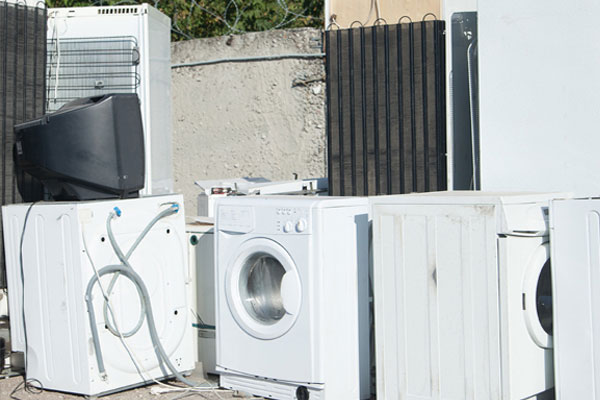
- Residual materials, including large items used in the home, made of wood, metal, plastic or any other recyclable material
- Appliances from which halocarbons have been removed
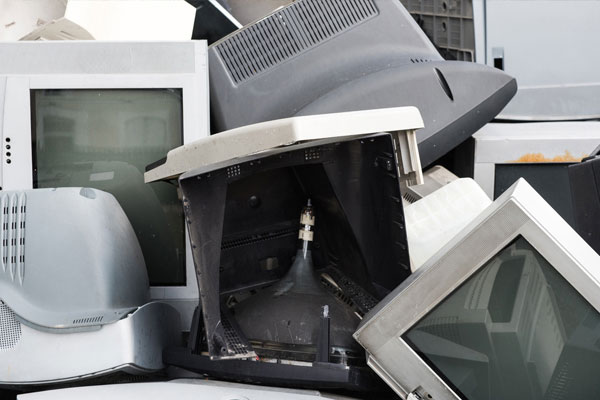
- Electric appliances of any size (stoves, toasters, microwave ovens, etc.)
- Barbeques (without gas tanks)
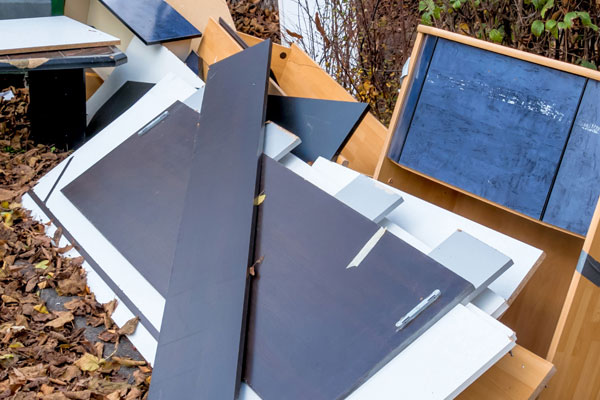
- Kitchen cabinets
- Bathtubs, toilets, sinks
- Bookcases
- Filing cabinets
- Non-upholstered furniture made of wood, metal or plastic (tables, chairs, desks, chests of drawers, etc.)
- Baseboard heaters, kitchen range hoods
- Doors, windows, mirror, glazing
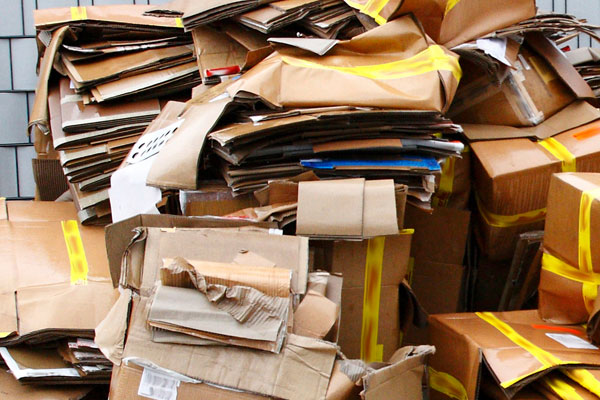
- Large carton boxes
- Rigid plastics and packaging plastics
- Hot water tanks
- Pool covers (rolled only)
- Bicycles
Accepted articles: Construction, renovation and demolition debris
Residual materials from residential construction, renovation and demolition:
- Aggregates of brick, mortar, rock remnants, earth, asphalt and concrete
- Asphalt shingles and asphaltic concrete
- Lumber
- Ceramics
- Electric wiring
- Cladding materials
- Ferrous metals (metals containing steel and iron) and non-ferrous metals (aluminum, copper, nickel, zinc, etc.)
- Melamine
- Gypsum board
- Fabric
- Plate glass
Rejected articles
- Mattresses and upholstered furniture (such as sofas and armchairs)
- Carpets
- Appliances containing refrigerant gas
ACCEPTED MATERIALS
Here’s what you can place in your blue bin:
- Containers: Rigid plastic bottles, milk and juice containers, aluminum cans, tin cans.
- Packaging: Cardboard boxes (clean and dry), paper bags, milk/juice cartons (emptied and rinsed).
- Printed Materials: Newspapers, flyers, magazines, sheets of paper (non-laminated).

What's New: Newly accepted materials include chip bags, small yogurt containers, Nespresso coffee capsules (Nespresso green bag required), beverage cups, food trays, and rigid Styrofoam food containers (except expanded polystyrene), such as meat/fish trays.
Before placing items in the bin:
- Empty and lightly rinse containers.
- Remove jar lids (except small caps).
- Flatten cardboard boxes to save space.
- Separate different materials from the same packaging.
PROHIBITED MATERIALS
Some containers and packaging disrupt the recycling process and should not be placed in the blue bin:
- Empty pressurized metal containers (e.g., aerosols): Take them to an ecocentre.
- Expanded polystyrene foam packaging (Styrofoam): Recognizable as it breaks into small beads—bring it to an ecocentre.
Expanded Polystyrene (EPS) – To Be Dropped Off Only at Ecocentres. Here’s Why:
Expanded Polystyrene (EPS), often referred to as Styrofoam, is a lightweight form of polystyrene made up of small beads expanded using steam. It is mainly used for protective packaging (appliances, electronics, etc.) and in the construction sector (insulation panels).
Unfortunately, EPS cannot be recycled through the blue bin because it easily breaks into small beads that contaminate other recyclable materials. These particles stick to surfaces, making them difficult to remove, and can damage sorting facility equipment. As a result, any contaminated recyclable material must be sent to landfill.
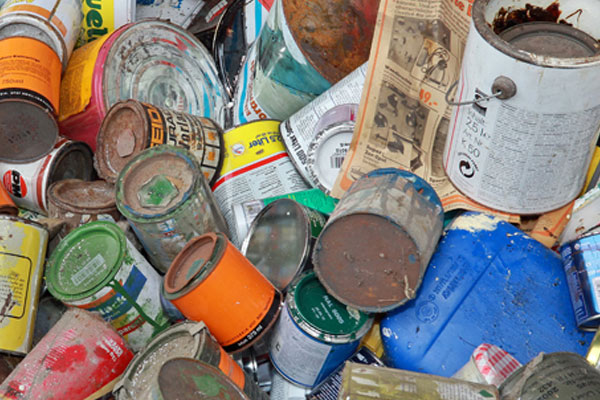
Reminder: Hazardous household waste (paint, batteries, solvents) should never be placed in the recycling bin or trash. Take them to an ecocentre.
BLUE BIN
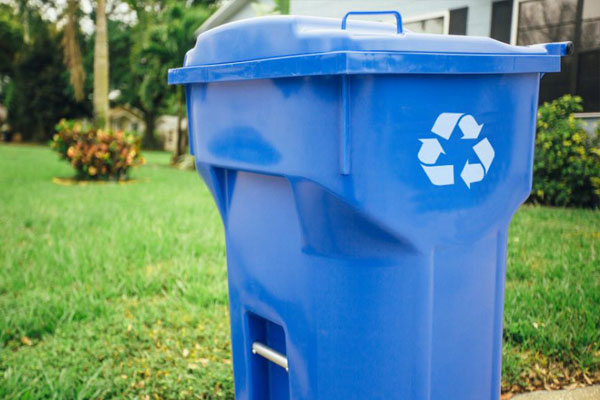
How to properly use your blue bin:
- Place it at the curb after 8 PM the night before collection or before 7 AM on Tuesday morning.
- Position the wheels and handle facing your property.
- Leave at least 60 cm (2 feet) of space between the blue bin and the brown bin for organic waste if both bins are out.
- Do not overload the bin: Maximum weight of 80 kg.
- Keep the lid closed to prevent water or snow accumulation.
Maintenance: Clean your bin occasionally with baking soda to neutralize odors.
Moving: The bin is provided free of charge by the Town and remains the property of the municipality. It must stay on the property when moving.
Damaged bin? Contact the Public Works Department at 514-457-2877.
Think to reduce and reuse before recycling.
FOR MORE INFORMATION
For any questions related to recycling collection:
- Public Works: 514-457-2877
- Closest Ecocentres to Baie-D’Urfé:
- Saint-Laurent
3535 Sartelon Street, H4R 1E6 - LaSalle
7272 Saint-Patrick Street, H8N 2W7
TOWN HALL
20410 Lakeshore Road
Baie-D’Urfé, Qc
H9X 1P7
Tel. : 514 457-5324
info@baie-durfe.qc.ca

